Corporations worldwide are embracing Renewable Energy Certificates (RECs) as a key solution to meet sustainability targets and offset Scope 2 emissions. By matching electricity consumption with renewable energy generation, businesses can take real, verified action to reduce their carbon footprint.
RECs offer a tangible way to invest in renewable projects, support global sustainability, and improve your corporate image. It’s a win for the planet-and for your business.
Corporations worldwide are embracing Renewable Energy Certificates (RECs) as a key solution to meet sustainability targets and offset Scope 2 emissions. By matching electricity consumption with renewable energy generation, businesses can take real, verified action to reduce their carbon footprint.
RECs offer a tangible way to invest in renewable projects, support global sustainability, and improve your corporate image. It’s a win for the planet-and for your business.
Corporations worldwide are embracing Renewable Energy Certificates (RECs) as a key solution to meet sustainability targets and offset Scope 2 emissions. By matching electricity consumption with renewable energy generation, businesses can take real, verified action to reduce their carbon footprint.
RECs offer a tangible way to invest in renewable projects, support global sustainability, and improve your corporate image. It’s a win for the planet-and for your business.
RECs can be bought and sold independently from physical electricity. By purchasing RECs, you claim the environmental benefits of renewable energy-without having to directly use it.
When consumers retire a REC, they claim the associated environmental benefits, ensuring transparent and verifiable sustainability claims.
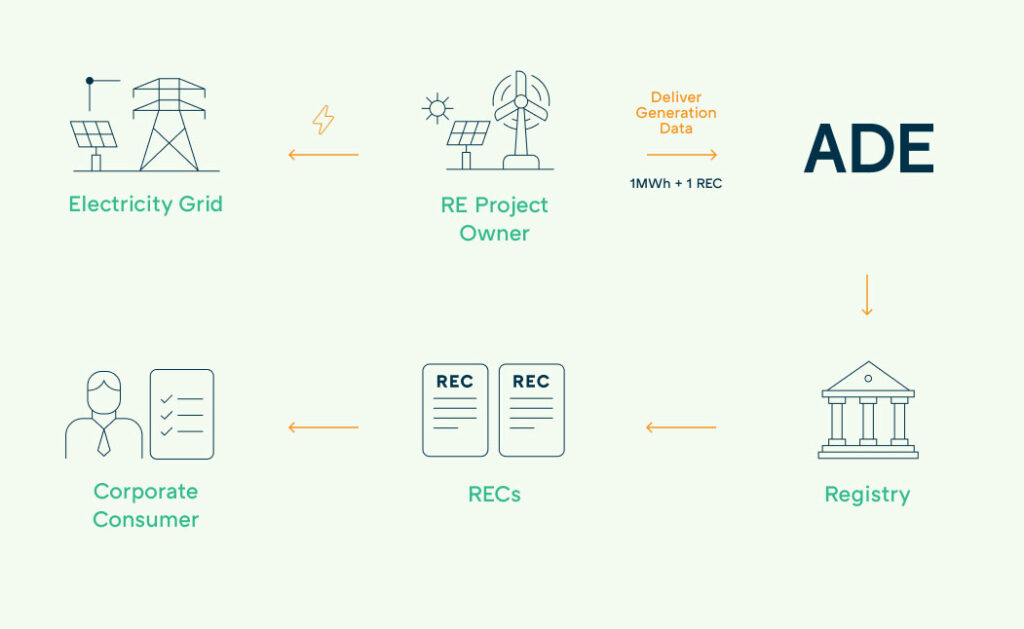
A Renewable Energy Certificate (REC) is a market-based instrument that certifies the generation of one megawatt-hour (MWh) of electricity from a renewable energy source like solar, wind, hydro, biomass, or biogas. RECs represent the environmental benefits of renewable energy generation.
How do RECs work?
RECs track and support renewable enegry production because once electricity enters the grid, it becomes indistinguishable from other sources. RECs allow you to verify and support clean energy amid the mix of conventional power.
How are RECs generated?
RECs are generated from renewable enegery sources such as wind, solor, hydro or biomass. Each time a renewable energy source products one megawatt-hour (MWh) of electricity, one REC is created.
Your Path to Sustainability Starts Here
Whether you are a Corporate Consumer or a RE Project Owner, ADE is help you to achieve your sustainability goals.